
Operational Risk Advisory
TRIAD Risk Governance provides principal-led executive advisory services, including operational risk governance, contractor governance, and critical control verification, to organizations operating in mining, capital projects, and other high-consequence industrial environments.
TRIAD helps executive leadership identify where operational exposure is building, where governance is weakening, and where verification and accountability should be strengthened before the next event forces the issue.
Engagements span MSHA- and OSHA-regulated operations, from mines and aggregate sites to industrial construction, capital projects, and data centers.
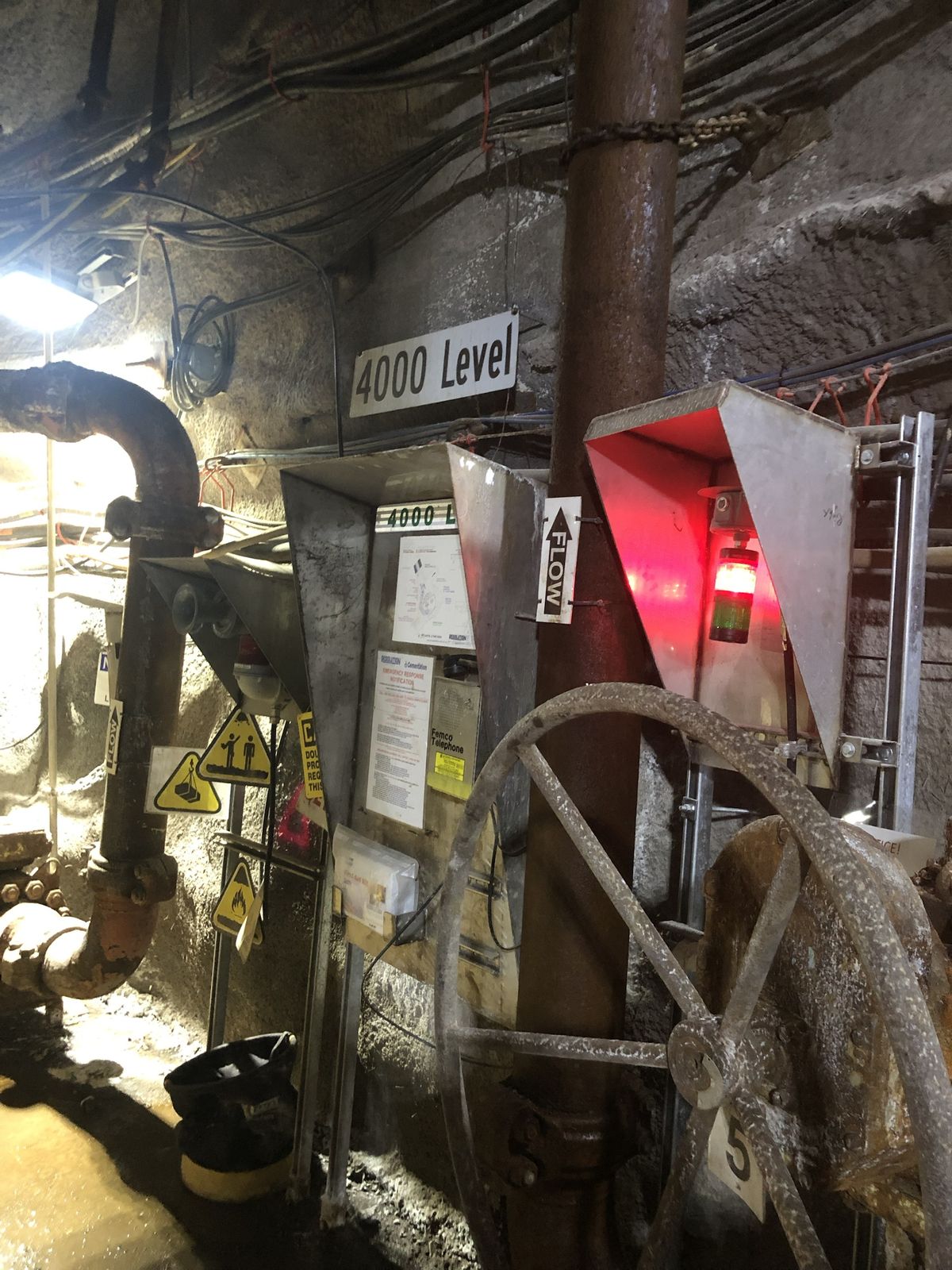
Executive Operational Risk Assessments
Organizations can have strong standards, procedures, and training programs while still experiencing recurring operational vulnerabilities.
TRIAD provides independent executive operational risk assessments, including capital project risk assessments, designed to evaluate whether governance systems and field execution are producing the intended operational outcomes.
Assessments may examineOperational Governance Advisory
TRIAD works with executive leadership to strengthen the systems through which operational risk is identified, managed, verified, and escalated.
Contractor Governance & Interface Reviews
Contractor relationships can create significant operational exposure when responsibilities, interfaces, authority, and accountability are not clearly defined or consistently executed.
TRIAD evaluates contractor governance and organizational interfaces to identify areas where operational expectations may diverge from field execution.
Shutdown & Turnaround Advisory
Shutdowns and turnarounds introduce concentrated operational risk through changing work scopes, contractor density, schedule pressure, simultaneous activities, and temporary operating conditions.
TRIAD provides executive advisory support focused on governance, readiness, accountability, contractor interfaces, and operational control.
Commissioning Readiness
Commissioning represents a critical transition from project execution to operational performance.
TRIAD evaluates readiness across organizational, operational, governance, contractor, and emergency-response considerations to help identify vulnerabilities before startup.
Regulatory & MSHA Advisory
TRIAD provides independent advisory support relating to regulatory expectations, mine safety governance, operational accountability, and organizational defensibility.
The objective is to help leadership understand not only what regulatory requirements require, but how those expectations translate into organizational systems and field execution.
TRIAD also provides MSHA Part 46 and Part 48 training.
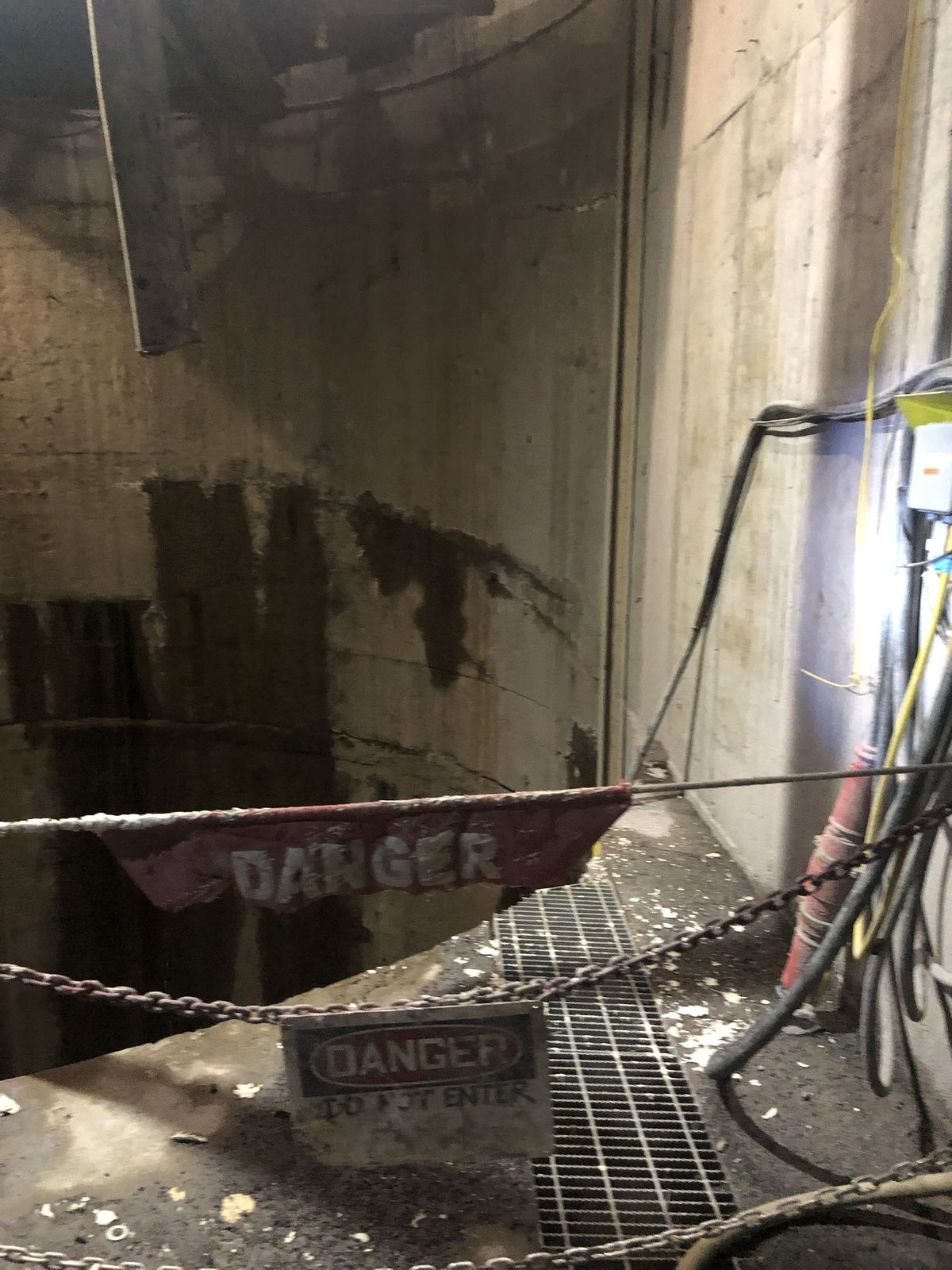
Critical Control Verification
TRIAD evaluates whether critical controls areThe objective is not simply to determine whether a control exists, but whether it is capable of preventing or mitigating the intended consequence.
Engagement Approach
Every engagement follows a structured advisory approach designed to evaluate governance systems and field execution, and deliver practical recommendations that strengthen operational resilience and regulatory defensibility.
- STEP 1Executive DiscoveryInitial discussions with executive leadership to understand strategic objectives, operational priorities, organizational challenges, and the desired outcomes of the engagement.
- STEP 2Governance ReviewEvaluation of governance systems, management processes, contractor interfaces, organizational standards, and critical control frameworks to establish how operational risk is intended to be managed across the organization.
- STEP 3Field VerificationOn-site observations, interviews, and operational verification to evaluate how organizational expectations are being executed in practice and where meaningful governance gaps or operational vulnerabilities may exist.
- STEP 4Executive FindingsA confidential executive briefing summarizing governance strengths, identified vulnerabilities, operational exposure, and opportunities for improvement.
- STEP 5Strategic RoadmapDevelopment of a prioritized implementation roadmap focused on strengthening governance, improving accountability, reducing organizational exposure, and supporting long-term operational performance.
- STEP 6Ongoing AdvisoryContinued executive advisory support to review progress, evaluate emerging operational challenges, and help ensure improvement efforts remain aligned with organizational objectives.
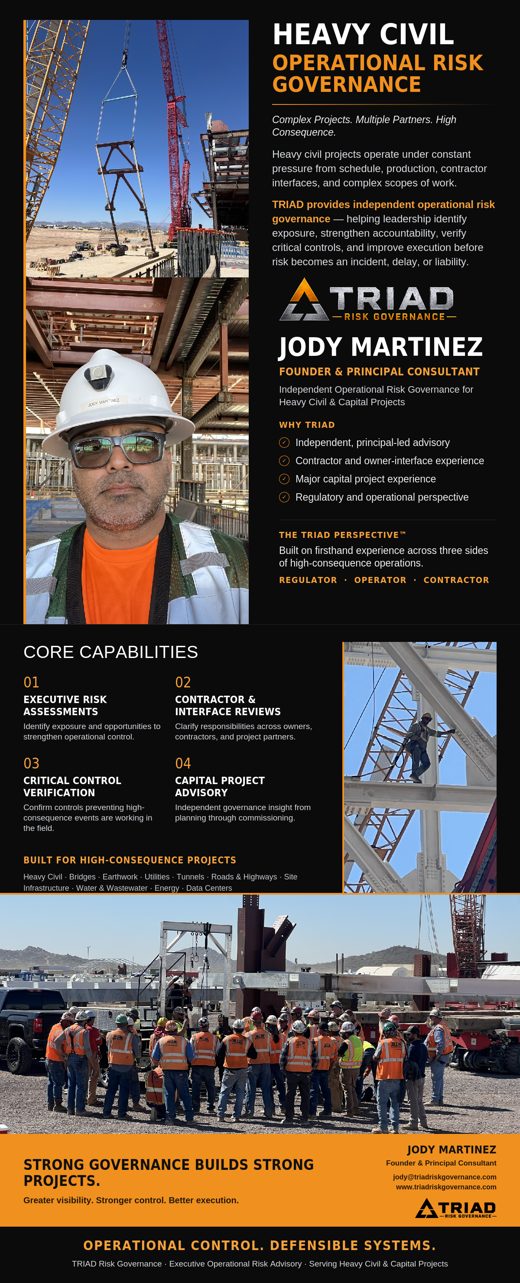
Heavy Civil Operational Risk Governance
A one-page overview for heavy civil and capital project leadership.